
Motac Neuroscience

Collaborations

Scientific progress in CNS research increasingly relies on the combination of complementary expertise, technologies and translational approaches. Motac participates in national and international research consortia that bring together academic institutions, biotechnology and pharmaceutical companies, and specialised research partners. These multidisciplinary programmes combine complementary scientific expertise, technologies and resources to address complex challenges in CNS research.

Through international research consortia and collaborative programmes, we contribute our expertise in translational neuroscience, preclinical study design, validated in vivo disease models, behavioural assessment, imaging, biomarker analysis and post-mortem evaluation. These collaborations bring together multidisciplinary teams to investigate complex disease mechanisms, identify new therapeutic targets and generate robust preclinical proof-of-concept data.

Our collaborative approach enables each partner to contribute its specific expertise while working towards a shared scientific objective. From early research to preclinical efficacy assessment, Motac provides the scientific insight, specialised models and tailor-made study designs required to move promising therapeutic approaches forward.

Sequence showing a man transitioning from a wheelchair to walking up stairs with a walker, representing the NeuroRestore collaboration for spinal cord injuries.

NeuroRestore

Advancing Neurotechnologies to Restore Movement

NeuroRestore is a research, innovation and treatment centre based in Switzerland and jointly supported by EPFL, Lausanne University Hospital (CHUV) and the University of Lausanne (UNIL). Co-directed by Professor Grégoire Courtine and Professor Jocelyne Bloch, the centre develops implantable neurotechnologies and bioengineering strategies designed to restore neurological functions. Its research combines neuroscience, neuroengineering, neurosurgery and rehabilitation, supported by rigorous preclinical studies in rodent and non-human primate models.

Since 2008, Motac collaborates with Grégoire Courtine’s team on the preclinical development of innovative neuroprosthetic approaches. An initial collaboration focused on a wireless brain–spine interface developed to bypass spinal cord injury. The system records movement-related activity from the motor cortex and translates it into targeted electrical stimulation of the spinal cord. Preclinical studies demonstrated that this approach could restore intentional control of locomotion in a non-human primate model of spinal cord injury. The collaboration was subsequently extended to Parkinson’s disease, with the objective of addressing gait and balance disorders that often remain resistant to conventional treatments. Several other neuroprosthetic approaches were tested for improving patients’ lives.

Motac contributed its expertise in non-human primate models, movement disorders and translational preclinical research. Motac provided the specialised preclinical models and scientific expertise required to adapt and evaluate targeted spinal cord stimulation as a potential approach for improving locomotor function. This contribution supported the technological and conceptual developments needed to translate the neuroprosthetic strategy from preclinical research towards clinical application.


AND-PD

Understanding Anxiety in Parkinson’s Disease

AND-PD was a multidisciplinary Horizon 2020 research project dedicated to investigating the mechanisms underlying anxiety, with or without depression, as a non-motor comorbidity of Parkinson’s disease. The project aimed to improve the diagnosis, management and personalised treatment of these symptoms by examining how Parkinson’s disease alters brainstem neural circuitry and neurotransmitter systems involved in mood and emotional processing.

The consortium brought together leading academic, clinical and industry experts from across Europe and Israel. Coordinated by the Spanish National Research Council (CSIC), it included the Italian Institute of Technology, Karolinska Institutet, the University of Bordeaux, the Hebrew University of Jerusalem, University College London, King’s College London, Fundación para la Investigación Médica Aplicada, Transine Therapeutics, Modus Research and Innovation, and Motac.

The partners combined expertise in neurophysiology, behavioural neuroscience, molecular biology, brain imaging, clinical research, RNA-based therapeutic approaches and translational disease models. This multidisciplinary structure enabled AND-PD to investigate anxiety in Parkinson’s disease across preclinical models, post-mortem brain samples and patient data.

Motac contributed its expertise in translational neuroscience and preclinical Parkinson’s disease research to the animal-model component of the project. Working alongside consortium partners, Motac participated in the development and characterisation of models designed to define anxiety- and depression-related phenotypes associated with Parkinson’s disease. This work helped connect changes in neural circuitry with behavioural manifestations of anxiety and contributed to the consortium’s broader objective of identifying new therapeutic targets and biomarkers for Parkinson’s disease comorbidities.

Hand holding a glowing lightbulb beneath a digital brain network, symbolizing the AND-PD research collaboration.
3D illustration of an elderly woman reading in an armchair, representing the NEXGEN-PD collaboration for Parkinson's disease research.

NEXGEN-PD

Advancing a New Vaccine for Parkinson’s Disease

NEXGEN-PD is a Horizon Europe research and innovation project developing a novel therapeutic vaccine approach for Parkinson’s disease. At the heart of this project is WISIT, an innovative vaccine platform designed to activate potent immune cells in the skin and generate a strong and selective immune response against pathological forms of alpha-synuclein, a protein closely associated with the development and progression of Parkinson’s disease.

Alongside the vaccine programme, NEXGEN-PD is developing diagnostic assays based on extracellular vesicles found in blood and urine. These assays aim to identify biomarkers of Parkinson’s disease using minimally invasive samples, potentially enabling earlier diagnosis and the monitoring of biological responses to treatment.

Motac leads the Work Package, which investigates the mode of action and biological effects of the antibodies induced by the WISIT vaccine candidates.

Motac conducts both in vitro and in vivo studies using alpha-synuclein preformed fibril seeding models.
The in vitro programme evaluates the ability of vaccine-induced antibodies to limit the formation and propagation of alpha-synuclein pathology in neuronal cells.

The in vivo programme assesses therapeutic immunisation with the selected WISIT vaccine candidates in a murine PFF model of Parkinson’s disease. Motac’s contribution includes PFF generation, intracerebral inoculation, immunisation studies and subsequent pathological analyses, including immunohistochemistry and Western blotting. These studies evaluate neuronal degeneration and the ability of the vaccine-induced antibodies to reduce existing alpha-synuclein aggregates or inhibit the further spread of alpha-synuclein pathology.

Through this work, Motac provides essential preclinical data on the biological activity and efficacy of the WISIT vaccine candidates, contributing to their progression towards subsequent safety and clinical development stages.

Coordinated by Tridem Bioscience, NEXGEN-PD brings together 12 organisations with complementary expertise in vaccine development, Parkinson’s disease research, preclinical evaluation, toxicology, biomarker discovery, clinical development, regulatory affairs and health economics.

The consortium comprises Tridem Bioscience, Paracelsus Medical University, Austrian Red Cross Research, Motac France, Kineto Lab, Aurigon, Gouya Insights, Granzer Regulatory Consulting & Services, Philipps University of Marburg, Prosenex Ambulatory Operation, Modus Research and Innovation, and the Institute for Medical Technology Assessment.

Together, the partners are advancing a new therapeutic vaccine strategy and minimally invasive biomarker-based diagnostic tools, from preclinical development through to clinical investigation

PARMED

Advancing RNA-Based Therapies for Parkinson’s Disease

PARMED is a ground-breaking research and development project dedicated to advancing a novel RNA-based therapeutic approach for Parkinson’s disease. Funded by Eurostars, it aims to develop a first-in-class disease-modifying treatment capable of addressing biological mechanisms involved in disease progression, rather than solely managing its symptoms.

The programme focuses on chemically modified antisense oligonucleotides, or ASOs, designed to inhibit specific microRNAs involved in Parkinson’s disease-related pathways. MicroRNAs regulate the expression of multiple genes and influence complex biological networks. Targeting these molecules therefore offers an opportunity to act on several interconnected mechanisms involved in neuronal dysfunction and neurodegeneration.

Prior to the launch of PARMED, Neumirna Therapeutics, a Danish biotech company, identified lead ASO candidates in collaboration with the Center for RNA Medicine at Aalborg University. These candidates were subsequently tested with Motac. PARMED builds on this initial research to further develop and validate the most promising candidates as potential disease-modifying treatments for Parkinson’s disease.

Within PARMED, Motac contributes its extensive expertise in Parkinson’s disease, translational neuroscience and preclinical proof-of-concept studies, responsible for the in vivo preclinical evaluation of the selected RNA-based therapeutic candidates in relevant models of Parkinson’s disease.

Following the in vivo studies, Motac also performed the associated post-mortem analyses. These included tissue collection and processing, histological examination of relevant brain regions, and the assessment of treatment-related neuropathological changes.

By combining its expertise in experimental models of Parkinson’s disease, in vivo study design and post-mortem tissue analysis, Motac generated essential translational data to evaluate the biological activity, efficacy and therapeutic potential of the selected RNA-based approach.

This work contributed to bridging the gap between RNA therapy discovery and preclinical development, supporting the consortium’s objective of advancing a potential disease-modifying treatment for Parkinson’s disease.

PARMED brings together four organisations with complementary expertise in RNA biology, therapeutic discovery, Parkinson’s disease research and preclinical development: Neumirna Therapeutics, the Center for RNA Medicine at Aalborg University, the Institute of Neurodegenerative Diseases at the University of Bordeaux and CNRS and Motac.

This combination of biotechnology, academic research and specialised preclinical capabilities creates an integrated pathway from RNA target identification and therapeutic design to disease-relevant preclinical validation.
By bringing together leading French and Danish expertise, PARMED aims to accelerate the development of a new RNA-based therapeutic strategy capable of modifying the progression of Parkinson’s disease and ultimately improving outcomes for patients

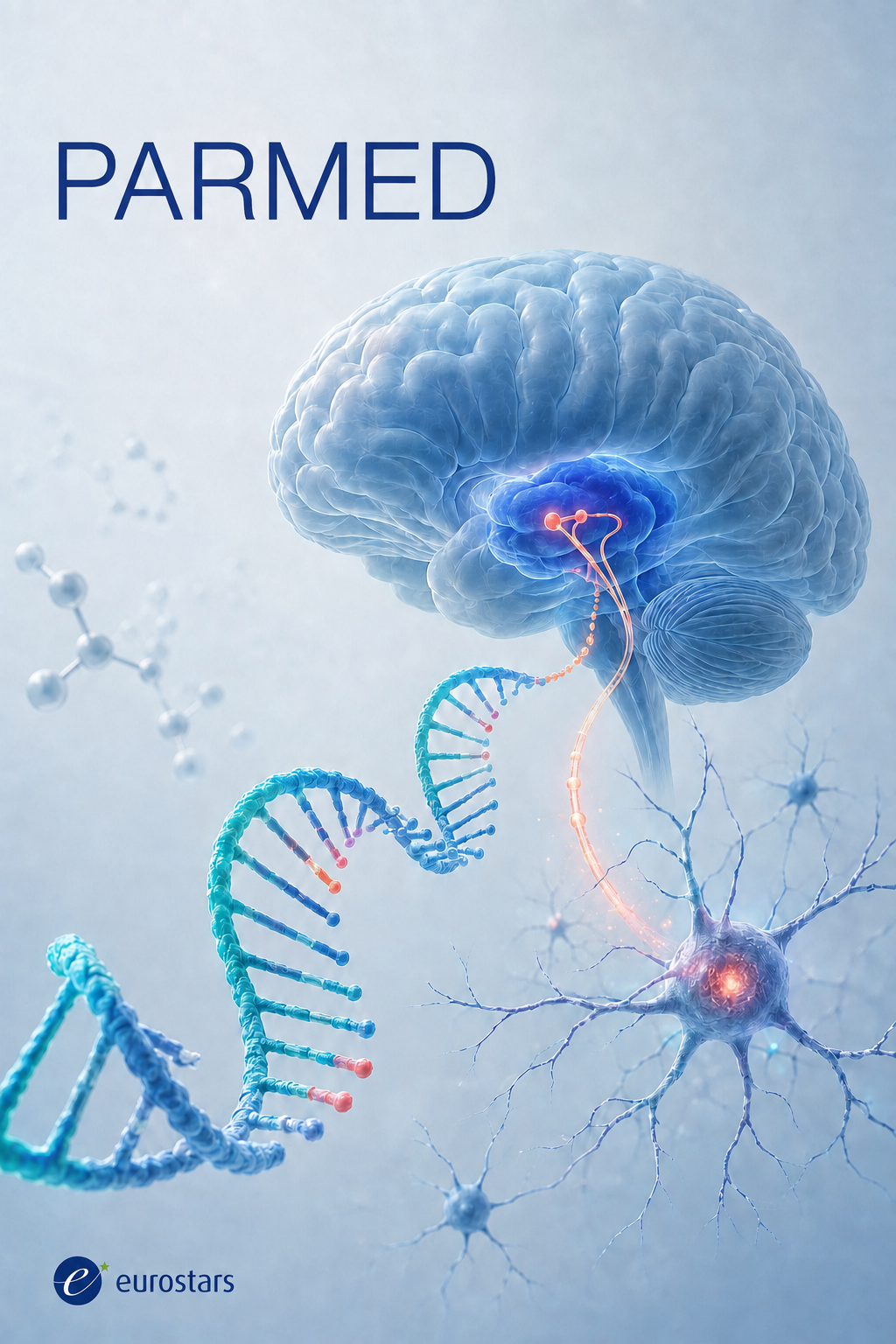
Graphic for the PARMED collaboration showing a human brain connected to a DNA helix via a glowing neural pathway.

Drive your preclinical projects forward

Discuss your upcoming preclinical study with our scientific team and accelerate your proof of concept.

Défiler vers le haut